
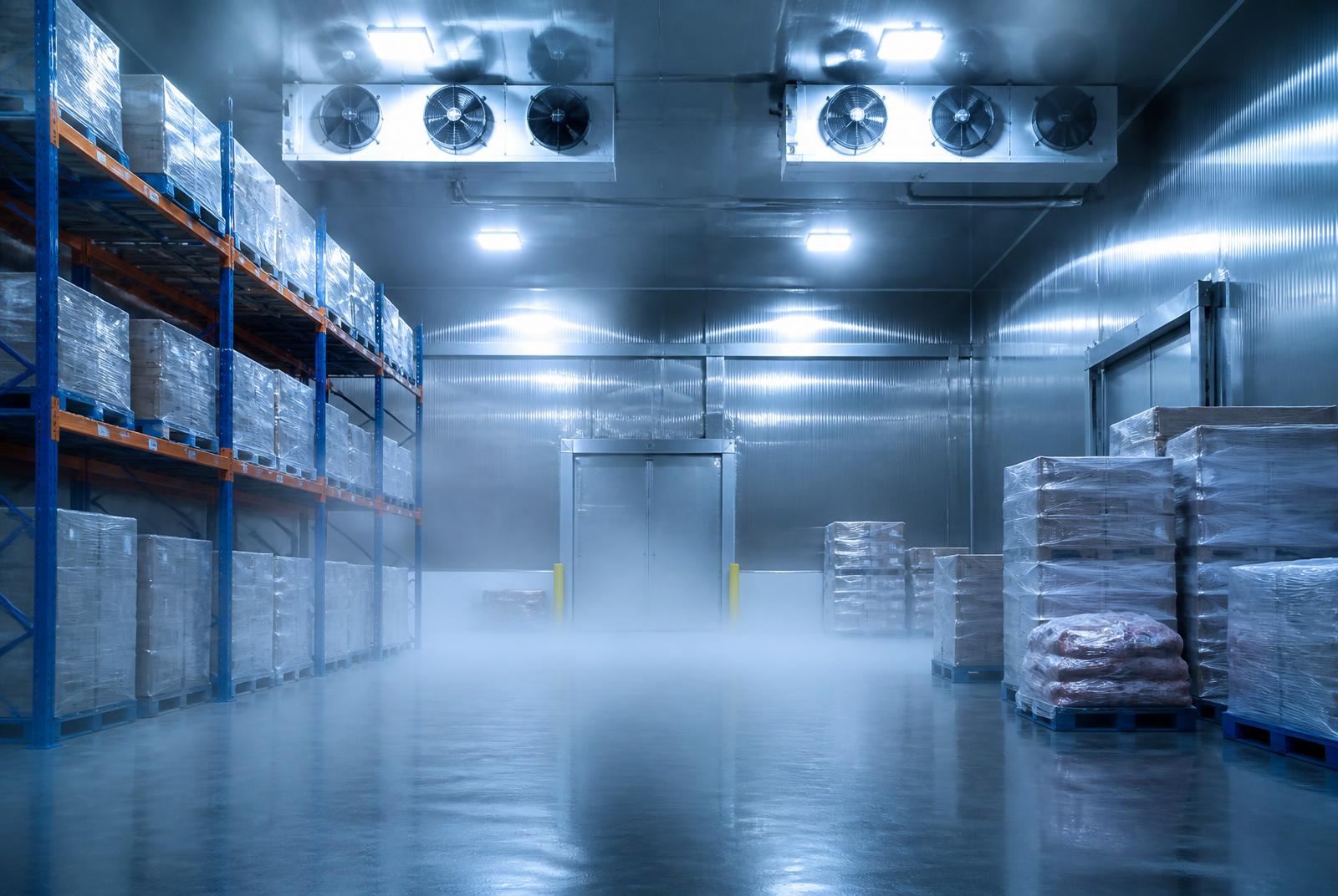
IFC estimates that cold-chain investment in emerging markets could reach approximately US$160 billion annually by 2050 as temperature-controlled infrastructure becomes increasingly important across food, agriculture, pharmaceuticals and distribution.
What is happening
IFC's work on sustainable cooling and cold chains describes emerging markets as the centre of a long-term infrastructure build-out, with cold-chain investment expected to reach around US$160 billion in annual investment by 2050. This is an expectation based on modelled demand, not a committed or guaranteed investment figure.
Why it matters
The gap is measurable today. UNEP reports that the lack of cold-chain infrastructure contributes to the loss of approximately 526 million tonnes of food — around 12% of global production in the referenced analysis. Food, agriculture, pharmaceutical distribution and modern retail all depend on continuity of temperature, and that continuity is an equipment and engineering problem before it is a logistics problem.
Wider cooling demand is also rising: UNEP's Global Cooling Watch 2025 indicates cooling demand could more than triple by 2050 under business-as-usual conditions.
Key data
Cold-chain market in emerging markets expected to reach US$160 billion in annual investment by 2050 — projection (IFC, Sustainable Cooling: Cold Chains).
Lack of cold-chain infrastructure contributes to the loss of about 526 million tonnes of food, roughly 12% of global production in the referenced analysis (UNEP).
Cooling demand could more than triple by 2050 under business-as-usual conditions (UNEP, Global Cooling Watch 2025).
What the build-out requires
Commercial refrigeration equipment for retail, food service and distribution.
Cold rooms and walk-in cooler / freezer envelopes sized to the application.
Condensing equipment matched to temperature regime and ambient conditions.
Evaporators and air distribution appropriate to the stored product.
Controls, temperature monitoring and recording for compliance-sensitive loads.
Components, spares and consumables that keep installed capacity running.
Project-specific refrigeration supply coordinated to schedule and destination.
Methodology note
The US$160 billion figure is an IFC expectation for annual investment in emerging markets by 2050. It is a projection dependent on modelling assumptions and market conditions, not a guaranteed outcome. ANDES did not originate this research; it is referenced with attribution and paraphrased.