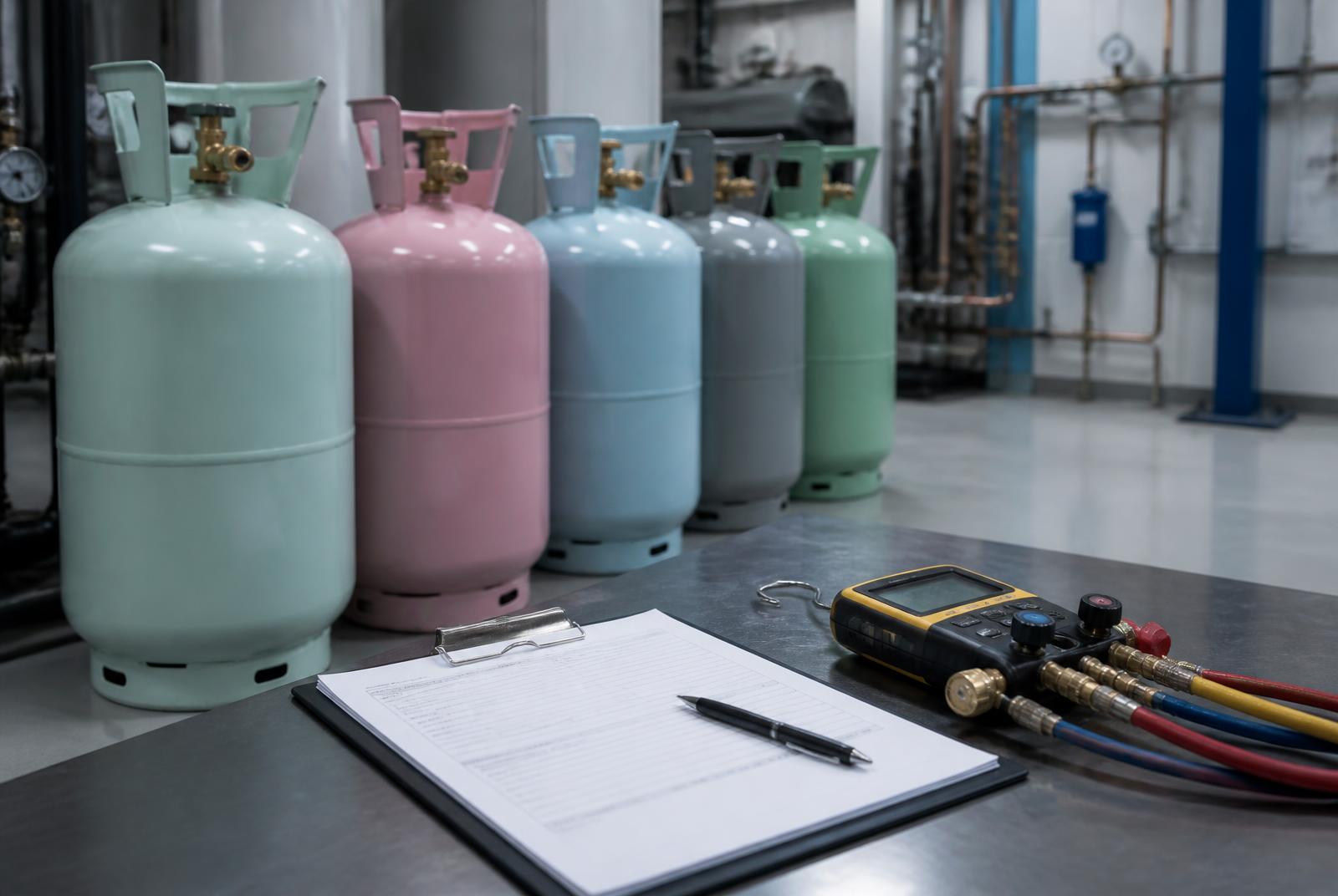
U.S. EPA Technology Transitions rules and SNAP decisions are organized by end-use application. For buyers, the practical consequence is that a refrigerant or system choice valid in one application is not automatically valid in another, and the documentation supporting the choice matters as much as the selection itself.
Executive signal
Refrigerant regulation shows up in purchasing long before it shows up on site: in which equipment can be specified for a given end use, in the components and service materials that accompany it, and in the records that support the selection.
What the public material says
The U.S. Environmental Protection Agency publishes Technology Transitions material under the AIM Act and maintains the SNAP programme's acceptability listings. Both are structured by sector and end-use application. EPA's own tables are the authoritative reference; summaries — including this one — are paraphrase.
Why procurement should care
Application boundaries, not product families, determine what may be specified for a given end use.
A2L-class refrigerants carry equipment, component and handling implications that follow the manufacturer's instructions and applicable codes.
Requirements written as "or equivalent" without an application reference are the most frequent source of clarification cycles.
Documentation captured at requisition is cheaper than documentation reconstructed at delivery.
Implications for project supply
Where a requirement touches refrigerant-bearing equipment, the intake record should state the end-use application, the referenced manufacturer and model or part number, and any code or specification the buyer is working to. That allows a line to be reviewed against the requirement instead of against an assumption.
Supplier-readiness questions
Is the end-use application stated, not just the equipment type?
Is the referenced manufacturer and model or part number recorded exactly as specified?
Are service materials, components and tools covered by the same application review as the equipment?
Who confirms regulatory applicability for the installation — and is that confirmation documented?
Source and disclaimer
This briefing paraphrases publicly available U.S. EPA material and links to the official sources. It is educational only, is not legal or compliance advice, and is not a determination of applicability for any specific project. ANDES INTERNATIONAL LLC states no compliance certification, no authorization and no equivalence between refrigerants, components or systems.